If you’ve rented a flat in Bengaluru, Mumbai, Delhi, Hyderabad, Pune, Chennai, or any growing Indian city, you know the feeling. You’ve shortlisted five buildings. They all look identical on the listing site. The “amenities” lists are interchangeable. The agent says everything is “all-inclusive”. And somewhere in that fog, you’re about to commit a deposit you can’t easily walk back from to a place you’ll spend the next two years in.
That gap, between what a listing says and what living there is actually like, is what know.place exists to close.
know.place is a map-first web app where real renters share structured, honest reviews about specific buildings. Not vibes about HSR Layout, Powai, or Gachibowli. Not “Koramangala is great” or “Andheri West is convenient”. The actual building you’re about to sign a lease in.
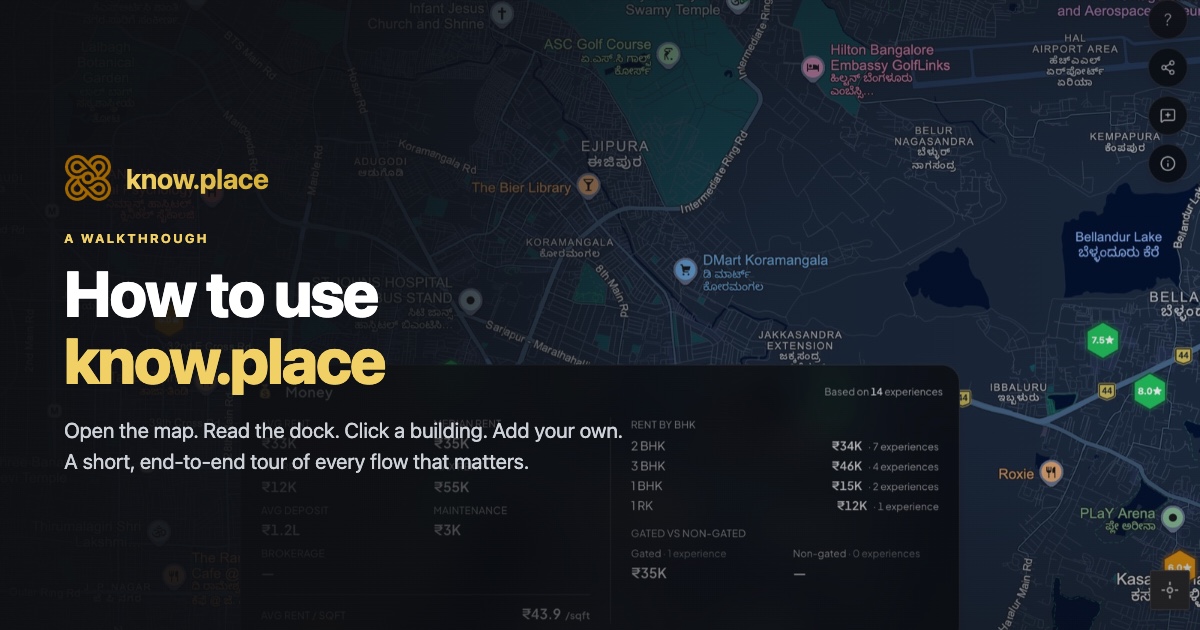
This post is the first in a short series. Here we’ll cover what it is and why we built it. The next post will walk through how to use it end-to-end with annotated flows.
Why we built this
Renting in India is one of the few major financial decisions where you are systematically the least informed party in the room.
- The landlord has been there for years. They know the borewell goes dry in April, that the municipal water tanker turns up half as often as the brochure claims, that the lift has been “under repair” since 2023.
- The broker has shown the place fifty times. They’ve heard every complaint from every departing tenant. They know which builders cut corners and which societies have functional RWAs.
- You get a 20-minute walkthrough, often in the evening when traffic is at its worst and the road outside is at its loudest. You see staged furniture and a freshly mopped floor. You sign.
For most people, the only “research” available is asking a friend or scrolling Reddit threads. That works if you know someone in the building. It collapses the moment you’re looking at a building no one in your network has lived in, which is the common case.
We’re trying to fix that, building by building.
What know.place actually is
Open know.place on a laptop or phone. On a first visit you’ll see a short, dismissible welcome card explaining what the map is for and how to read it.
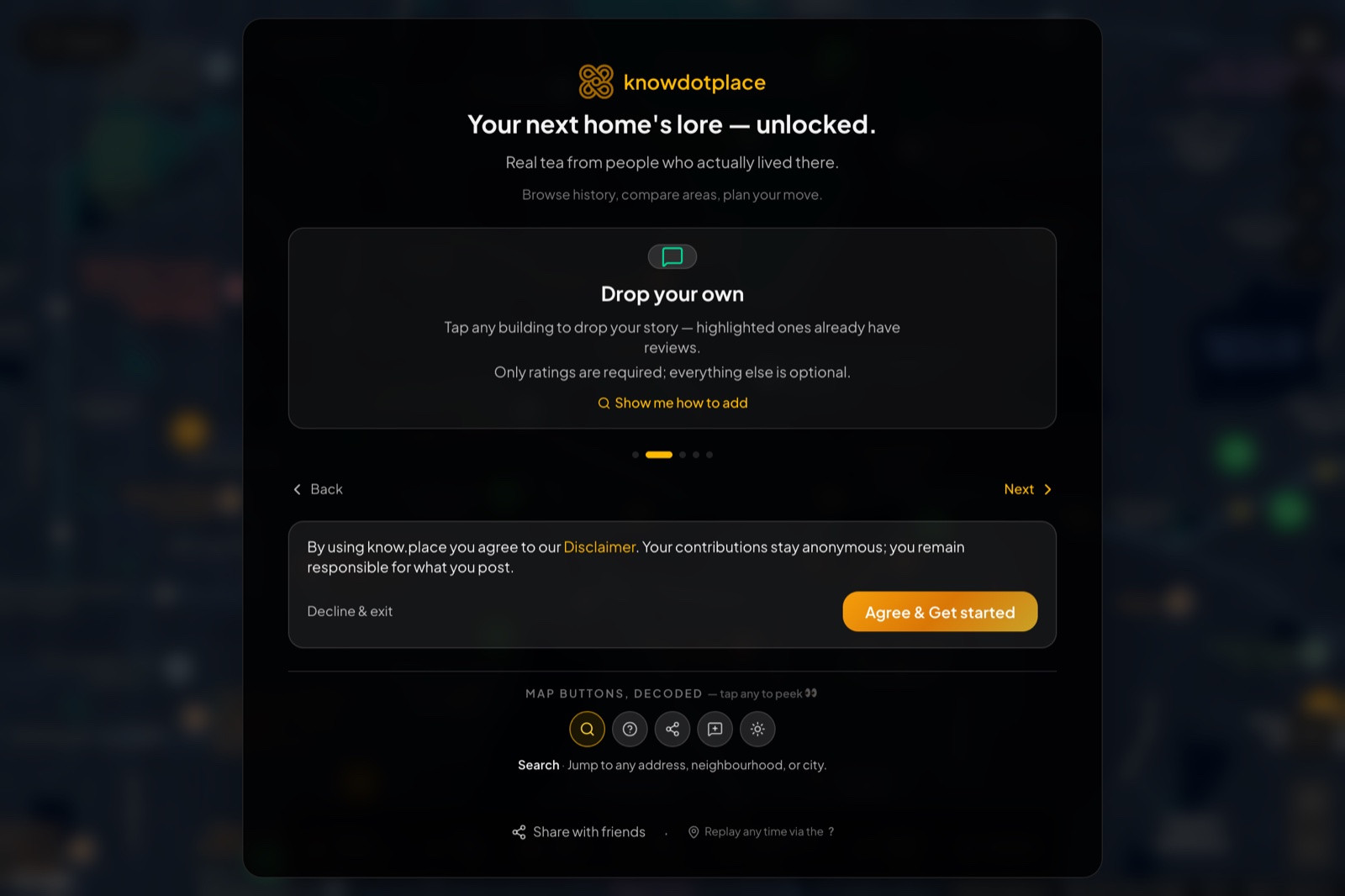
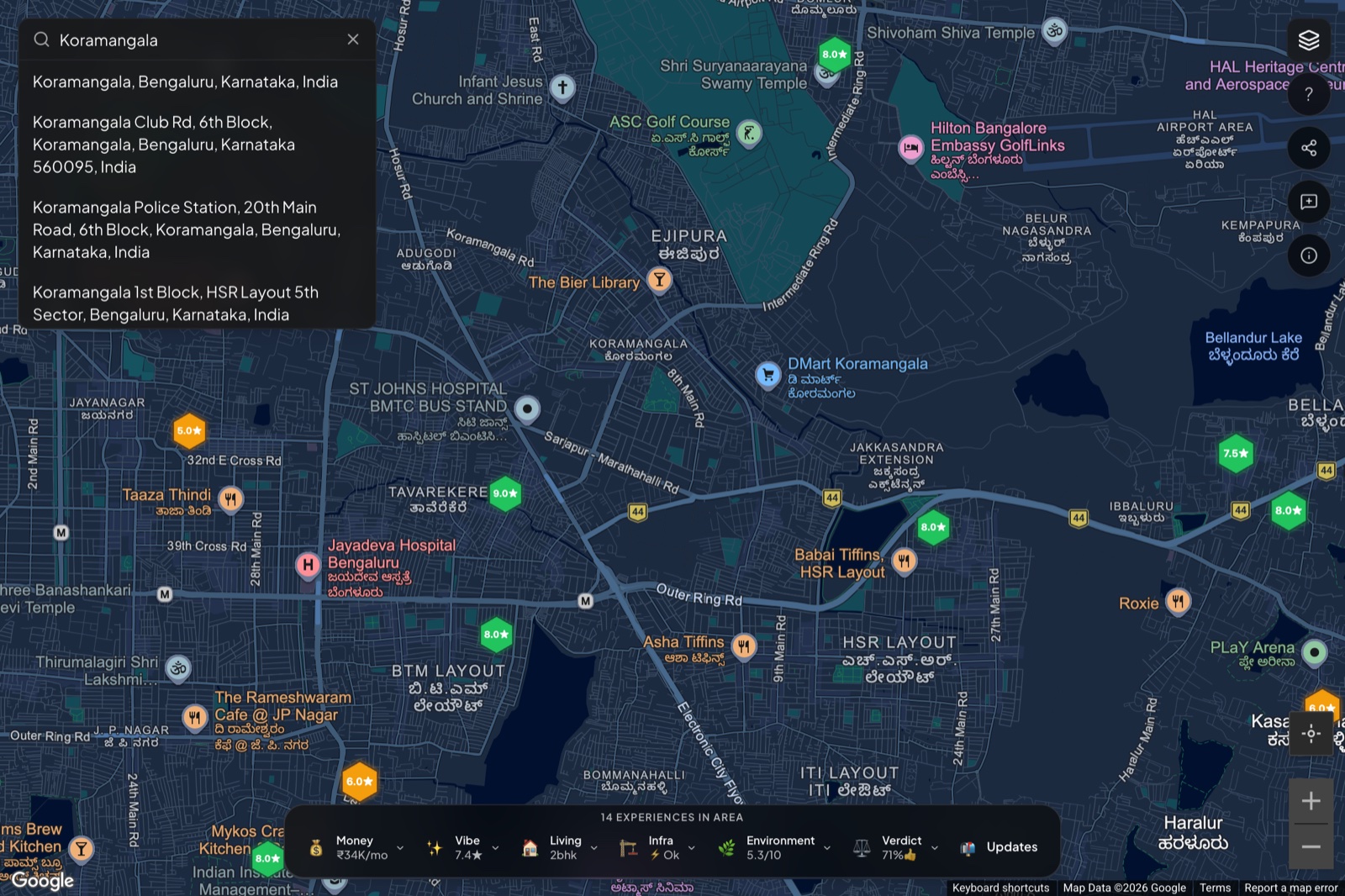
Dismiss it and you’ll land on a dark map of India. Search for any city you want, or scroll-zoom into one. The top-left has a search bar. The bottom shows a small pill (36 experiences across 6 cities, zoom in to explore) that counts the live dataset.
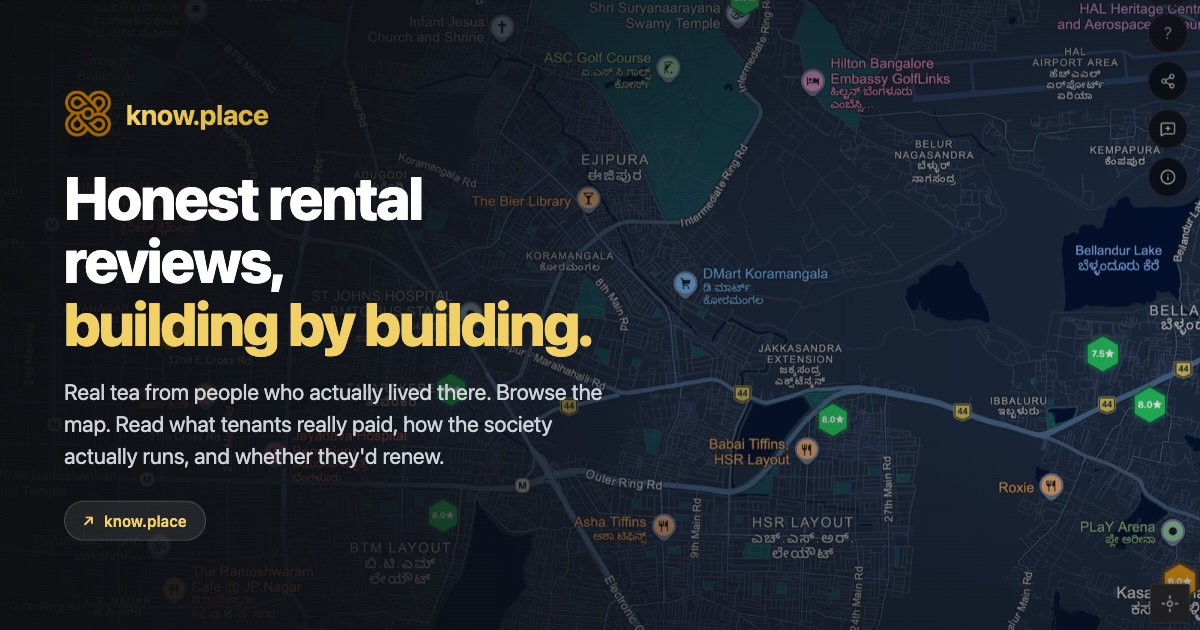
Zoom in, and the data shows up. The screenshots in this post zoom into Bengaluru because that’s where the dataset is densest right now, but the same UI works the same way over any city.
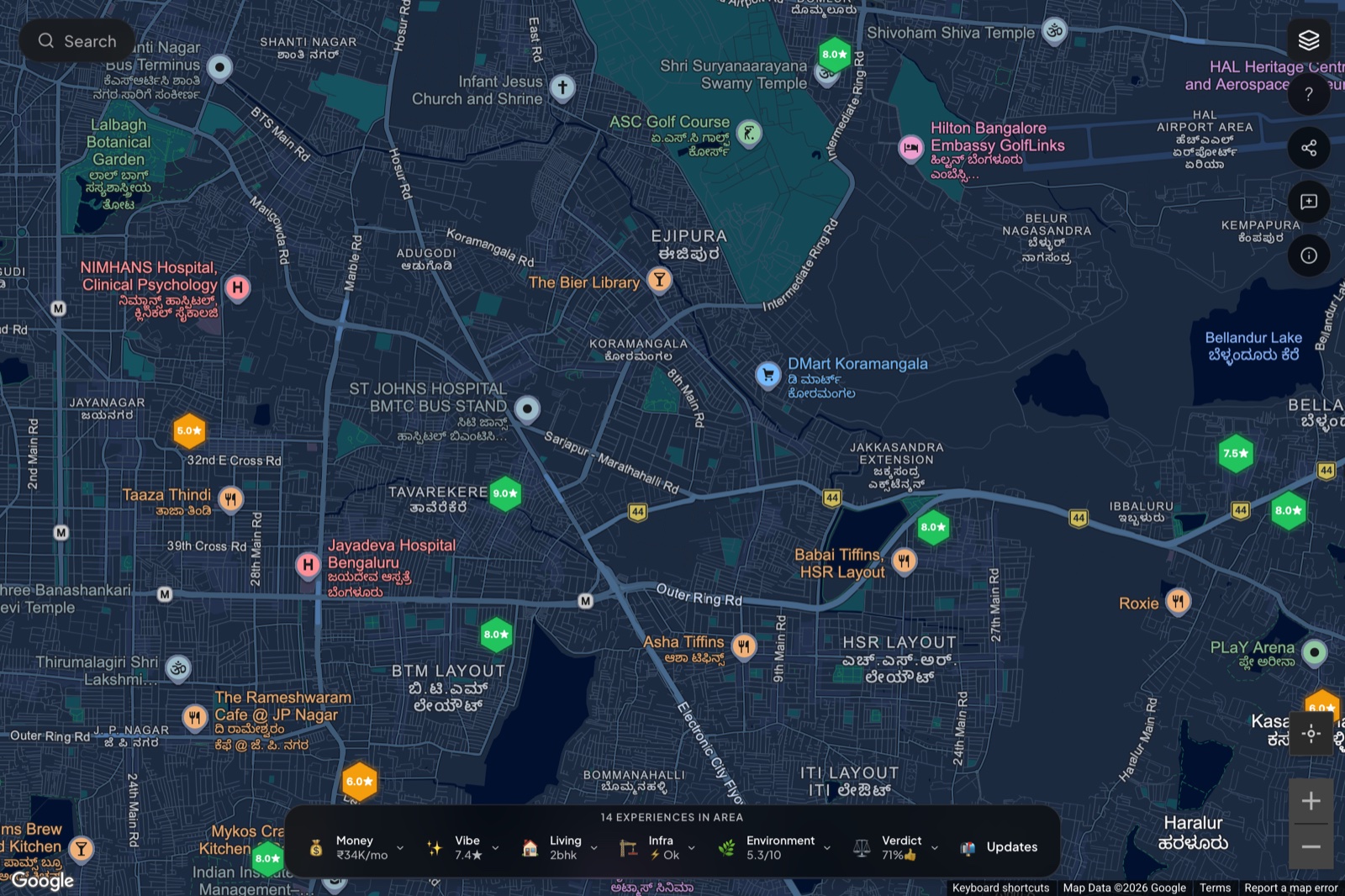
Each hexagon is a real building someone has actually lived in and reviewed. Green means high rating; amber means people had reservations. The number on the hexagon is the aggregate star rating across all experiences for that building.
This isn’t a sea of listings. There’s no “available now” filter, no “₹15K-25K” price slider, no broker contact button. The map shows you what living there is like. Where to actually rent (listings, brokers, owners) is somebody else’s problem to solve.
The building view
Click any hexagon. A panel opens with the full picture of that building, split into two scoped sections:
- Flat reviews: what specific tenants thought about their individual unit. The exact rent they paid, whether parking actually cost extra, water/power reality, would they renew.
- Building reviews: the society itself. Gating, management, lifts, maintenance, neighbours, the things you only learn after a few months.
The two are scoped separately because the experience of the flat and the building are genuinely different things, and conflating them is one of the reasons existing reviews feel useless.
The area dock
The horizontal dock at the bottom of the map summarises everything in the visible viewport:

Six pills, one per dimension. Money shows the median rent in the area. Vibe is the average star rating people gave the area itself. Living shows the most common configuration (2bhk, gated, semi-furnished). Infra is the consensus on connectivity and amenities. Environment is air, noise, greenery. Verdict is the share of reviewers who would rent in this area again.
Click any pill and it opens a detail panel with the breakdown: rent by BHK, top pros and cons in the area, gated vs independent split, would-rent-again percentages computed from real reviews.
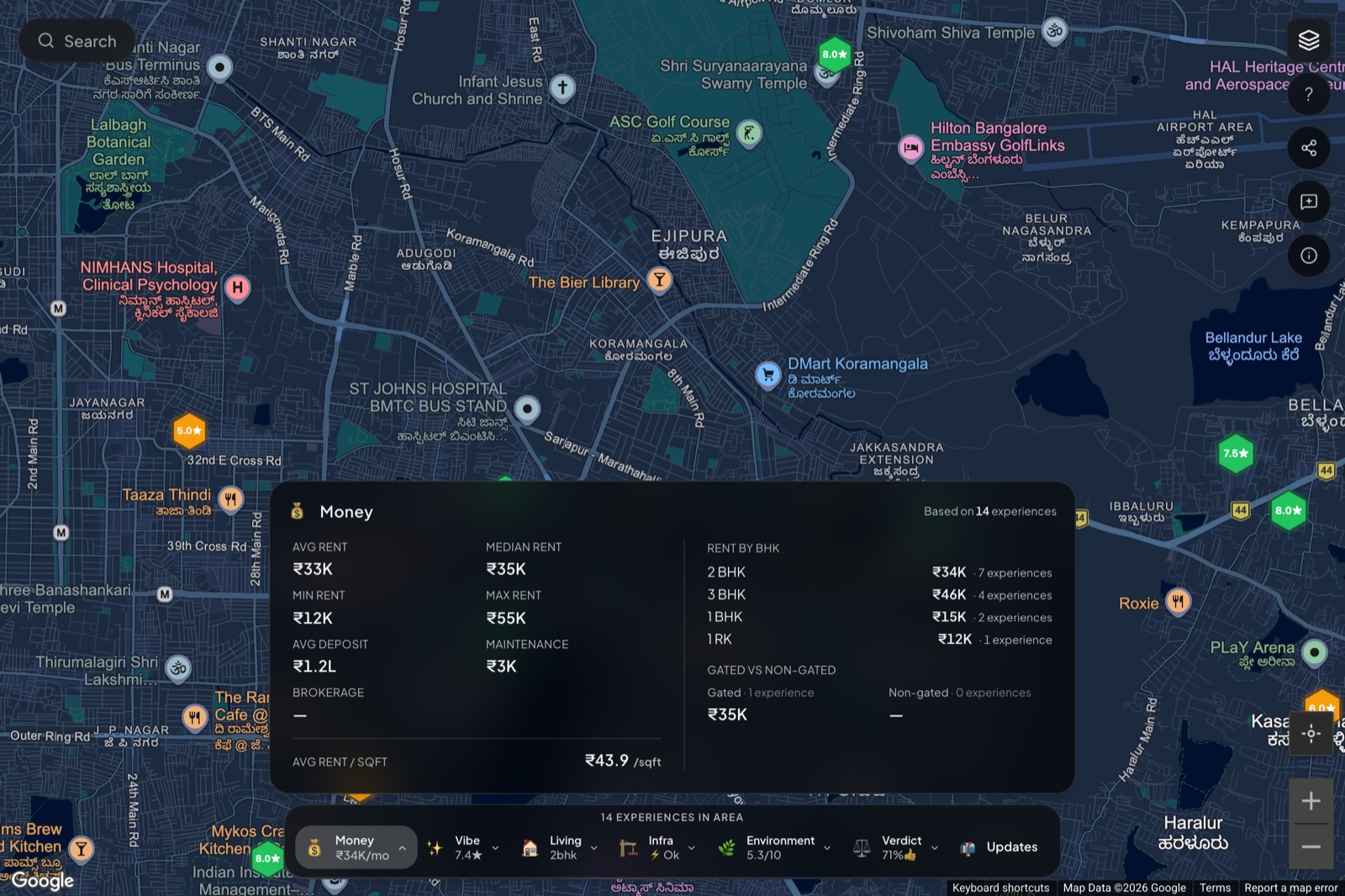
Zoomed in, you see specific buildings. Zoomed out a little, you see what the whole area looks like. Both are built up from the same reviews.
Map settings and insights
The top-right rail has the controls that change what the map looks like and what it shows you:
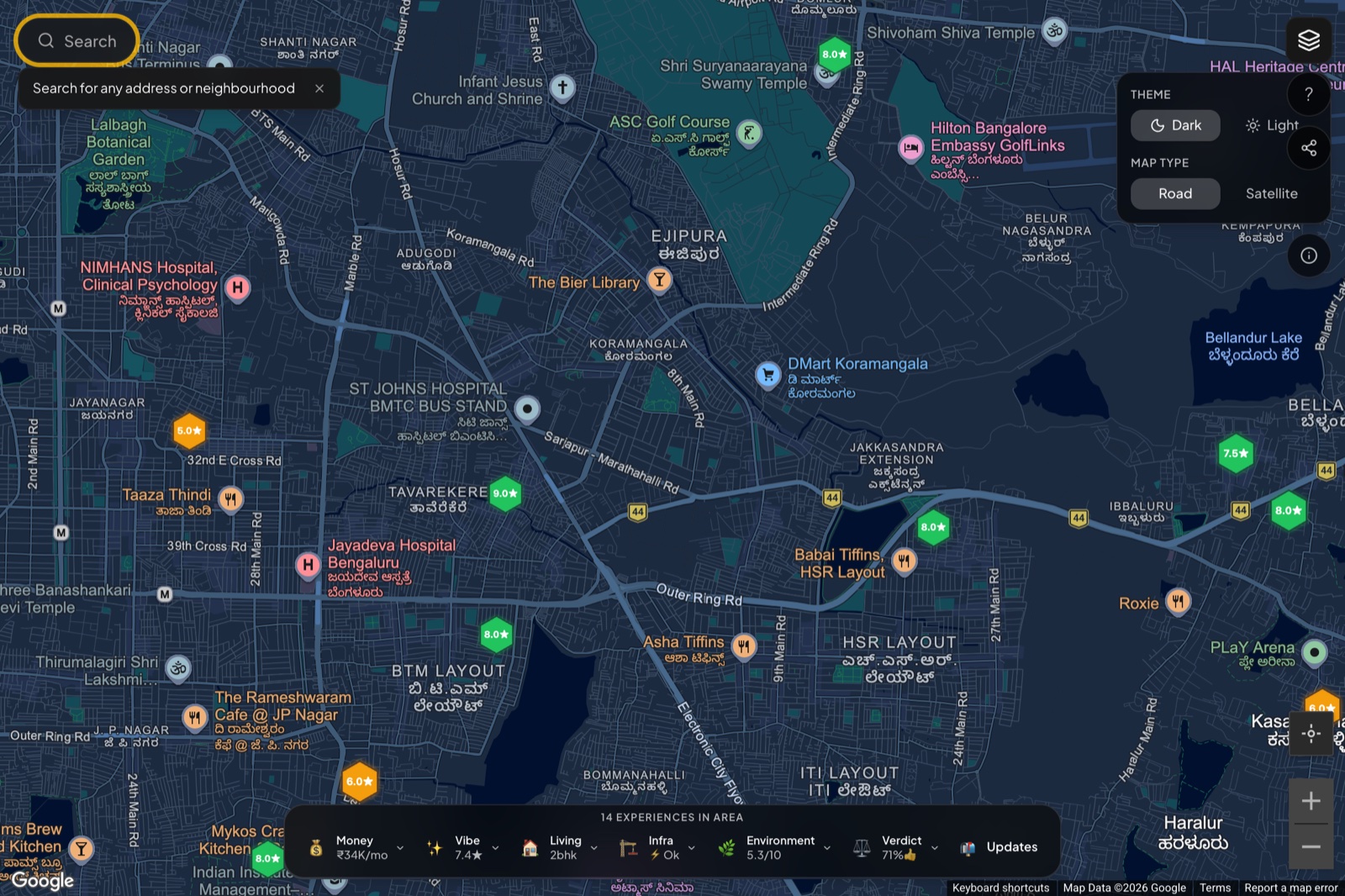
Theme and map type are obvious. A separate insights layer sits a level deeper, with civic data like ward boundaries, metro lines, transit, water and air-quality reports. Click a polygon and a dedicated insights panel opens with the contextual public-data story for that area. This layer is currently off by default while we onboard the data carefully (sources and last-updated dates are exposed when it’s on), but it’s worth toggling on if you’re trying to understand the area, not just the buildings.
How to use it (the 60-second tour)
The whole flow comes down to five steps:
- Open know.place.
- Search or zoom into the area you’re considering. Type a neighbourhood or address into the top-left search box, or just scroll-zoom the map.
- Scan the dock at the bottom to get the area-level signal: ₹/month, would-rent-again %, vibe star.
- Click hexagons for buildings on your shortlist. Read the actual experiences. Recent reviews under “Updates” carry more weight than old ones.
- Add yours when you sign your next lease (or when you’re moving out). Each new review makes the map sharper for the next person searching.
Where the data comes from
Every star on the map is a real person’s review. We don’t scrape, we don’t generate, we don’t infer. You can add an experience by signing in (Google OAuth, no spam) and filling a short structured form. Each field is designed to capture the specifics Indian renters actually care about:
- Per-vehicle parking charges, two-wheeler and four-wheeler separately
- BHK with
1RK / 1bhk / 2bhk / 3bhk+granularity - Furnished / semi-furnished / unfurnished, with what’s actually included
- Whether the building is gated, has a lift, has 24×7 power backup, has metered or community water
- The deposit number (yes, the actual figure)
- Whether the flat and the building/society deserve different ratings (they usually do)
- A short “would you rent here again” verdict, which turns out to be the single most predictive field we have
Almost every field is optional. Only the ratings are required; everything else is filled in to the extent you’re comfortable sharing. Even a partial review (rent paid, BHK, would-you-rent-again) can save the next person reading it real time, money, and the inconvenience of finding things out the hard way. The more you share, the more useful your contribution to people considering the building after you.
Submissions go through light moderation (PII stripping, obvious-spam removal) and then become part of the public dataset that powers everyone else’s map.
What’s next
More data layers and features are in the works. We’ll write about each one here as it ships. Stay tuned.
One ask
If you’ve rented anywhere in the last three years, add one experience. It takes about 4 minutes, and the next person searching for that building gets a real datapoint instead of a guess.
And if know.place has helped you avoid a bad lease, send it to a friend who’s flat-hunting. The dataset gets sharper with every honest review.
Renting somewhere new?
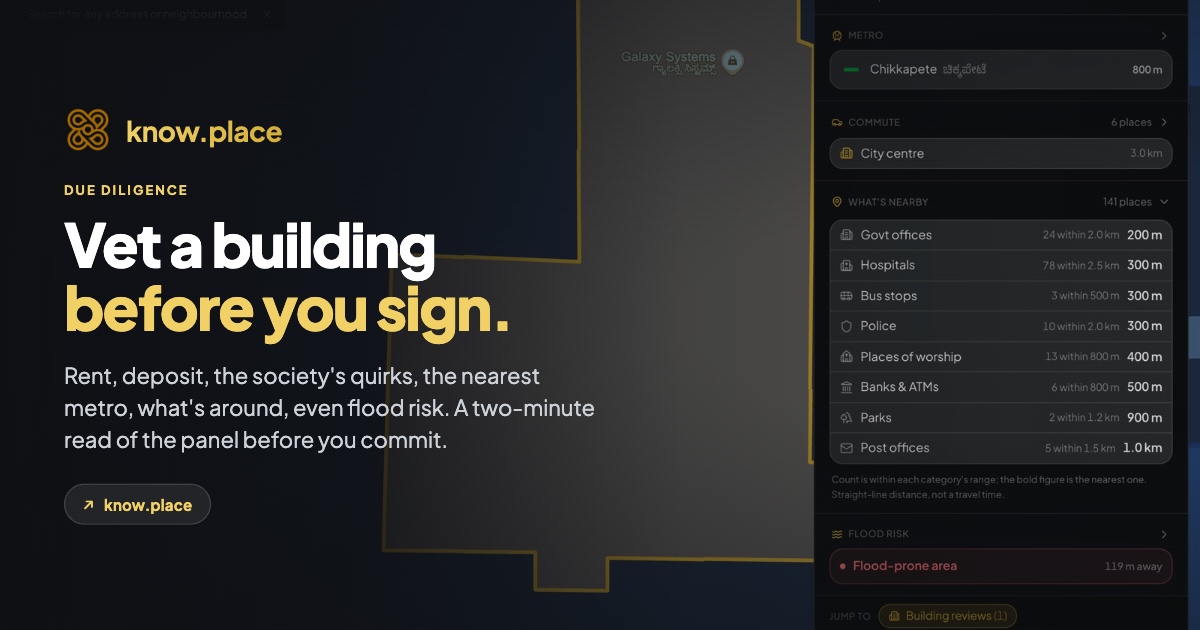
know.place maps honest, structured experiences of specific buildings, the rent, deposit, water, and power, from people who have actually lived there, so you can vet a place before you sign.