Bengaluru’s IT industry is distributed across multiple tech corridors, and choosing where to live based on your office location is the single most impactful decision for your daily quality of life. A wrong choice can mean 2-3 hours of daily commute - time that compounds into weeks lost every year. This guide maps the best residential localities to each major tech hub, with practical data on commute patterns, rental ranges, metro access, water reliability, and lifestyle considerations that affect your decision.
The Fundamental Principle: Stay on the Same Side
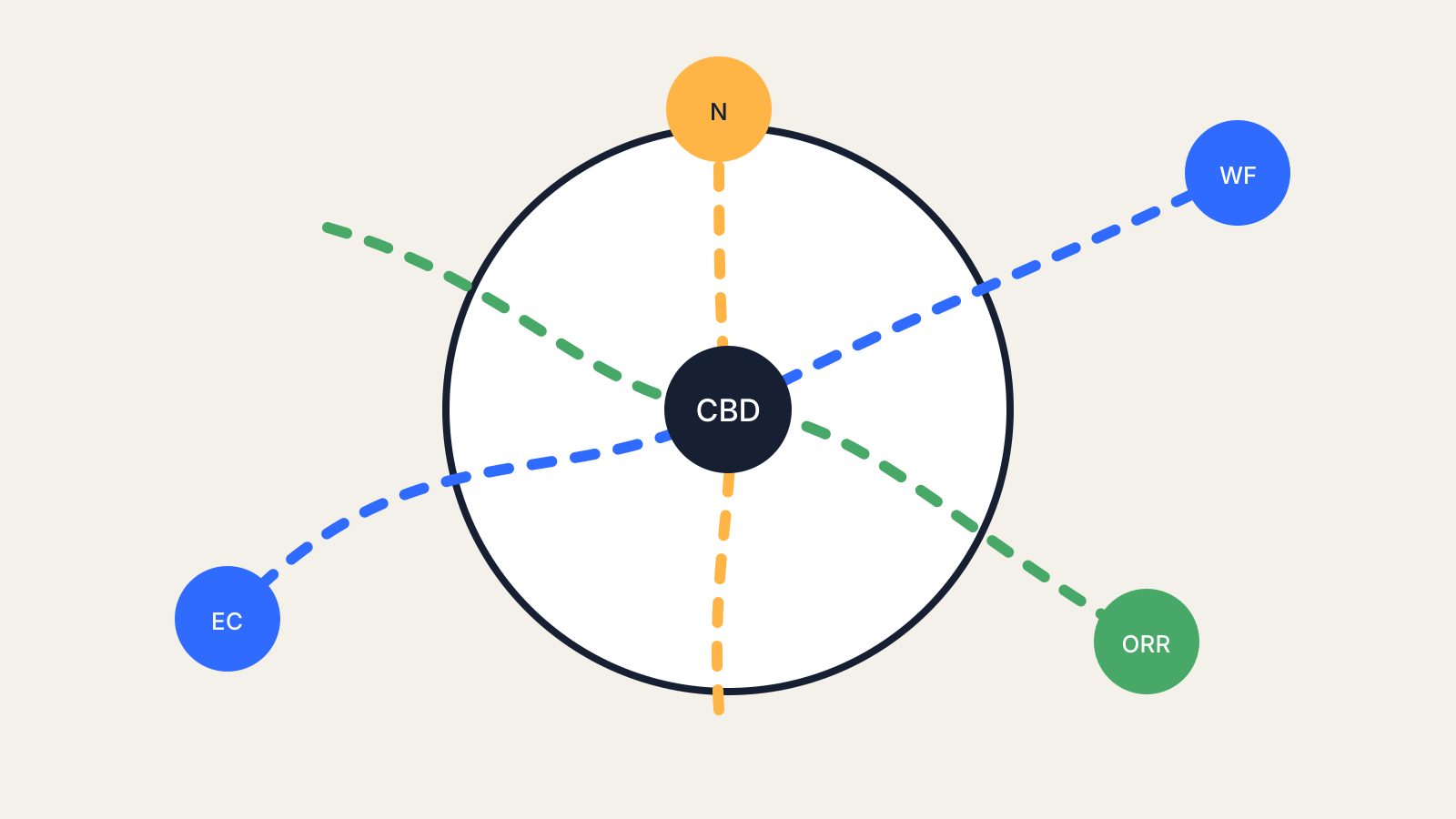
Live on the same side of the city as your office. This is the single most important rule for choosing a locality in Bengaluru. The city’s east-west and north-south corridors operate almost as separate cities during peak hours. Crossing from North Bengaluru (Manyata Tech Park) to South Bengaluru (Electronic City) during peak hours can take 90-120 minutes for a distance of just 30 km. The reverse is equally painful.
Bengaluru’s traffic congestion is structural, not incidental. The city was designed for a population of 3-4 million and now houses over 13 million. Key bottleneck junctions - Silk Board, KR Puram, Hebbal flyover, Marathahalli bridge - create cascading delays across entire corridors. Living on the same side as your office means you avoid these bottlenecks entirely.
Understanding Bengaluru’s Corridors
The city can be broadly divided into five corridors for commute planning:
| Corridor | Key Landmarks | Major Employers |
|---|---|---|
| South | Electronic City, Bannerghatta Road, JP Nagar | Infosys, Wipro, TCS, HCL, Biocon |
| Southeast (ORR) | Marathahalli, Bellandur, Sarjapur Road | Amazon, Goldman Sachs, Microsoft, Flipkart |
| East | Whitefield, ITPL, KR Puram | SAP Labs, Capgemini, Robert Bosch, Tata Elxsi |
| North | Manyata Tech Park, Hebbal, Yelahanka | IBM, Cisco, Cognizant, Shell, Wells Fargo |
| Central | MG Road, Lavelle Road, Domlur | Startups, fintech, consulting firms |
Cross-corridor commutes to avoid:
- South to East (Electronic City to Whitefield): 35-40 km, 90-150 minutes in peak traffic
- North to South (Manyata to Electronic City): 30-35 km, 90-120 minutes in peak traffic
- East to Central (Whitefield to MG Road): 18-22 km, 60-90 minutes via ORR in peak traffic
Tech Hub 1: Electronic City (Phase 1 and 2)
Major employers: Infosys (global headquarters), Wipro, TCS, HCL Technologies, Biocon, Siemens
Electronic City is Bengaluru’s largest IT corridor, located approximately 18 km south of the city center. It houses over 200 IT/ITeS companies and employs an estimated 150,000 professionals. The area has its own dedicated expressway (NICE Road connection) and the upcoming Yellow Line metro extension will significantly improve connectivity.
| Locality | Distance | Peak Commute | 1BHK Rent | 2BHK Rent | Why Consider |
|---|---|---|---|---|---|
| Electronic City | 0-3 km | Walk/bike | Rs 10,000-16,000 | Rs 15,000-24,000 | Zero commute, most affordable, walkable to office |
| BTM Layout | 8-12 km | 30-50 min | Rs 12,000-18,000 | Rs 18,000-28,000 | Vibrant social scene, restaurants, young crowd |
| JP Nagar | 10-14 km | 35-55 min | Rs 12,000-17,000 | Rs 18,000-30,000 | Green Line metro, family-friendly, established area |
| Bannerghatta Road | 6-10 km | 25-40 min | Rs 10,000-15,000 | Rs 16,000-25,000 | Direct road access, mid-range pricing |
| HSR Layout | 10-14 km | 35-60 min | Rs 14,000-20,000 | Rs 22,000-35,000 | Premium lifestyle, well-planned layout |
| Bommasandra | 2-5 km | 10-20 min | Rs 8,000-13,000 | Rs 12,000-20,000 | Budget-friendly, closest to Phase 2 |
Avoid: Whitefield, Marathahalli, Hebbal, Yelahanka - all require crossing congested corridors. Even with light traffic, these routes pass through Silk Board junction, which adds 30-60 minutes during peak hours.
Metro impact: The BMRCL network map is the source to check before making a lease decision because operational status and interchange timing change as lines open. For Electronic City, the RV Road-Bommasandra Yellow Line corridor is the critical rail link to watch; once fully useful for your office route, it changes the attractiveness of BTM Layout, Silk Board, JP Nagar, and Bommasandra.
Company transport: Infosys, Wipro, and TCS operate extensive shuttle networks from pickup points across South Bengaluru. Check your company’s shuttle routes - living near a shuttle stop (BTM Layout, JP Nagar, Jayanagar) can make the commute comfortable even if the distance is 12-15 km.
Lifestyle notes: Electronic City itself has improved significantly in recent years with malls (The Forum Neighbourhood Mall), restaurants, and grocery stores. However, the social scene remains limited compared to areas like BTM Layout or Koramangala. If you value nightlife and dining options, BTM Layout offers the best balance of commute and lifestyle for Electronic City workers.
Tech Hub 2: Outer Ring Road (ORR) - Marathahalli to Sarjapur Road
Major employers: Amazon (multiple buildings), Goldman Sachs, Microsoft (Signature Building), Oracle, Flipkart, SAP, Accenture, JP Morgan, Cisco (ORR campus)
The ORR stretch from Marathahalli to Sarjapur Road is Bengaluru’s most concentrated IT corridor. Virtually every major tech company has a presence along this 12 km stretch. It is also the most congested corridor in the city - ORR traffic during peak hours (8:30-10:30 AM, 5:30-8:00 PM) is notoriously slow, with average speeds dropping to 8-12 km/hr.
| Locality | Distance | Peak Commute | 1BHK Rent | 2BHK Rent | Why Consider |
|---|---|---|---|---|---|
| Marathahalli | 0-3 km | Walk/auto | Rs 12,000-17,000 | Rs 18,000-28,000 | Central to ORR, value for money |
| Bellandur | 2-5 km | 15-30 min | Rs 14,000-20,000 | Rs 22,000-35,000 | New apartments, near major campuses |
| HSR Layout | 3-6 km | 15-35 min | Rs 14,000-20,000 | Rs 22,000-35,000 | Well-planned, excellent food scene |
| Sarjapur Road | 3-8 km | 15-40 min | Rs 12,000-18,000 | Rs 18,000-30,000 | Newer construction, growing amenities |
| Koramangala | 4-8 km | 20-40 min | Rs 16,000-22,000 | Rs 25,000-40,000 | Premium lifestyle, startup hub, best dining |
| Whitefield | 5-10 km | 20-45 min | Rs 12,000-18,000 | Rs 18,000-30,000 | Established IT hub, family-friendly |
| Domlur | 5-8 km | 20-45 min | Rs 14,000-22,000 | Rs 25,000-40,000 | Central location, EGL proximity |
| Haralur Road | 2-5 km | 10-25 min | Rs 12,000-18,000 | Rs 18,000-30,000 | Numerous new apartment complexes |
Avoid: Jayanagar, Rajajinagar, Hebbal - cross-city routes through congested corridors add 45-75 minutes.
Key consideration: ORR traffic is the worst in Bengaluru during peak hours. Living closer reduces commute disproportionately - the difference between 3 km and 10 km on ORR can be 40+ minutes during peak. If your office is on ORR, prioritize proximity over everything else. Even a slightly more expensive apartment 2 km from your office is better value than a cheaper one 10 km away when you factor in commute time.
The Bellandur-Marathahalli stretch: This is the most congested part of ORR. If your office is between these two points, living in either Bellandur or Marathahalli (whichever is closer) dramatically reduces your commute. Taking internal roads through HSR Layout or Haralur can sometimes bypass the main ORR bottleneck.
Cycling potential: For offices on ORR, cycling is a viable commute option if you live within 5 km. The road infrastructure is not ideal, but many ORR employers have dedicated cycling parking and shower facilities. Cycling from HSR Layout or Bellandur to an ORR office takes 15-25 minutes regardless of traffic.
Tech Hub 3: Whitefield and ITPL (International Tech Park)
Major employers: SAP Labs (India headquarters), Capgemini, Robert Bosch, Tata Elxsi, numerous Global Capability Centers (GCCs)
Whitefield has evolved from a satellite town to a self-contained IT hub with its own ecosystem of housing, retail, and entertainment. The Purple Line metro extension to Whitefield (operational since 2023) has been transformative, connecting the area to central Bengaluru without road traffic dependency.
| Locality | Distance | Peak Commute | 1BHK Rent | 2BHK Rent | Why Consider |
|---|---|---|---|---|---|
| Whitefield | 0-4 km | Walk/auto | Rs 12,000-18,000 | Rs 18,000-30,000 | Walk to work, established area with good retail |
| Brookefield | 2-5 km | 10-25 min | Rs 13,000-19,000 | Rs 20,000-32,000 | Quieter, family-oriented, good schools |
| Kadugodi | 3-6 km | 15-30 min | Rs 10,000-15,000 | Rs 15,000-25,000 | Budget-friendly, near ITPL, metro station |
| Varthur | 4-7 km | 15-35 min | Rs 10,000-15,000 | Rs 16,000-25,000 | Affordable, newer apartments, lake proximity |
| Marathahalli | 6-10 km | 25-50 min | Rs 12,000-17,000 | Rs 18,000-28,000 | ORR access, more restaurant and social options |
| KR Puram | 5-8 km | 20-40 min | Rs 9,000-14,000 | Rs 14,000-22,000 | Budget option, railway junction, metro connected |
| Hoodi | 2-4 km | 10-20 min | Rs 11,000-16,000 | Rs 17,000-27,000 | Close to ITPL, growing residential area |
| Kundalahalli | 3-6 km | 15-30 min | Rs 11,000-16,000 | Rs 17,000-26,000 | Between Whitefield and Marathahalli |
Avoid: Koramangala, JP Nagar, Jayanagar - all involve ORR and Silk Board, adding 60-90 minutes to your commute.
Purple Line metro advantage: KR Puram, Hoodi, and Whitefield are now connected via the Purple Line extension, making these areas accessible from central Bengaluru without road traffic dependency. If you need to travel to MG Road or Majestic regularly (for personal or social reasons), living near a metro station (KR Puram, Hoodi, Whitefield) gives you the best of both worlds.
Whitefield’s self-sufficiency: Unlike older IT hubs, Whitefield has become largely self-sufficient with multiple malls (Phoenix Marketcity, VR Bengaluru, Forum Value Mall), hospitals (Columbia Asia, Manipal), schools (Inventure Academy, The International School Bangalore), and entertainment options. Many Whitefield residents rarely need to travel to the city center.
Family considerations: Whitefield and Brookefield are among the most family-friendly IT localities in Bengaluru. Wide roads, gated communities, proximity to international schools, and a relatively green environment make these areas attractive for families with children. The trade-off is distance from the city center’s cultural and nightlife scene.
Tech Hub 4: Manyata Tech Park and Outer Ring Road North
Major employers: IBM, Cisco, Cognizant, Shell Technology Center, AstraZeneca, Wells Fargo, Accenture, Nokia
Manyata Tech Park is Bengaluru’s largest tech park by area, housing over 50 companies and approximately 60,000 employees. Located near Hebbal, it benefits from proximity to the international airport and excellent flyover connectivity to the north.
| Locality | Distance | Peak Commute | 1BHK Rent | 2BHK Rent | Why Consider |
|---|---|---|---|---|---|
| Hebbal | 2-5 km | 10-25 min | Rs 14,000-20,000 | Rs 22,000-35,000 | Lake-adjacent, flyover connectivity, upscale |
| Hennur | 3-6 km | 15-30 min | Rs 11,000-16,000 | Rs 17,000-27,000 | Growing area, new construction, good value |
| Thanisandra | 2-5 km | 10-25 min | Rs 10,000-16,000 | Rs 16,000-26,000 | Closest affordable option to Manyata |
| Yelahanka | 5-10 km | 20-40 min | Rs 9,000-14,000 | Rs 14,000-23,000 | Budget-friendly, spacious apartments, Air Force area |
| Sahakara Nagar | 4-7 km | 15-35 min | Rs 12,000-17,000 | Rs 18,000-28,000 | Established residential, good schools, markets |
| Nagawara | 2-4 km | 10-20 min | Rs 11,000-16,000 | Rs 17,000-26,000 | Close to Manyata, lake area, affordable |
| Jakkur | 4-7 km | 15-30 min | Rs 10,000-15,000 | Rs 15,000-24,000 | Quiet, green area near aerodrome |
| Kalyan Nagar | 4-6 km | 15-30 min | Rs 13,000-18,000 | Rs 20,000-32,000 | Established area, good restaurants, HBR Layout adjacent |
Avoid: Electronic City, Sarjapur Road, Bannerghatta Road - extreme south locations requiring 90+ minute commute through the entire city.
Airport advantage: North Bengaluru localities are 15-30 minutes from Kempegowda International Airport, a significant benefit for professionals who travel frequently. From Hebbal, the airport is accessible via the elevated expressway in 20-25 minutes, even during moderate traffic.
Infrastructure developments: North Bengaluru is seeing significant infrastructure investment, including the proposed Phase 3 metro extension to the airport, the Peripheral Ring Road (PRR) northern arc, and several new residential townships. Property values and rental rates in Thanisandra, Hennur, and Jakkur are expected to increase as these projects progress.
Weekend connectivity: One limitation of North Bengaluru is distance from the city’s entertainment hubs (Koramangala, Indiranagar, MG Road). Weekend trips to these areas involve 45-75 minutes of travel. If your social life is centered in South or Central Bengaluru, factor this into your decision.
Tech Hub 5: Central Bengaluru (MG Road, Brigade Road, Lavelle Road, UB City)
Major employers: Startups, fintech companies (Razorpay, Zerodha), consulting firms (McKinsey, BCG), co-working spaces (WeWork, Awfis), design studios
Central Bengaluru offers the most urban lifestyle with walkability, metro access, and proximity to cultural institutions. However, rental prices are the highest in the city, and parking is challenging.
| Locality | Distance | Peak Commute | 1BHK Rent | 2BHK Rent | Why Consider |
|---|---|---|---|---|---|
| Indiranagar | 3-5 km | 15-30 min | Rs 16,000-24,000 | Rs 28,000-45,000 | Premium, nightlife capital, walkable, metro |
| Koramangala | 4-6 km | 15-35 min | Rs 16,000-22,000 | Rs 25,000-40,000 | Startup ecosystem, best food scene in the city |
| Domlur | 2-4 km | 10-20 min | Rs 14,000-22,000 | Rs 25,000-40,000 | Central, EGL proximity, relatively quiet |
| Frazer Town | 3-5 km | 15-25 min | Rs 12,000-18,000 | Rs 20,000-32,000 | Heritage area, food destination, diverse community |
| Ulsoor | 1-3 km | 10-20 min | Rs 14,000-20,000 | Rs 22,000-35,000 | Lakeside, very central, mixed residential-commercial |
| Richmond Town | 1-2 km | Walk/auto | Rs 16,000-24,000 | Rs 28,000-45,000 | Most central, premium pricing, corporate housing |
| Shantinagar | 2-4 km | 10-20 min | Rs 12,000-17,000 | Rs 18,000-28,000 | Central location, more affordable than neighbors |
| Langford Town | 2-3 km | 10-15 min | Rs 14,000-20,000 | Rs 22,000-35,000 | Quiet residential, close to MG Road |
Advantage: Central locations offer metro connectivity (Purple Line - MG Road, Cubbon Park, Trinity, Indiranagar stations) and walkability that is rare in Bengaluru. If you work in central Bengaluru, you may not need a vehicle at all.
Cost trade-off: Central Bengaluru rents are 40-60% higher than equivalent apartments in peripheral areas. A 1BHK in Indiranagar costs what a 2BHK costs in Hennur or Kadugodi. The trade-off is commute time saved and lifestyle gained - but for budget-conscious professionals, the premium may not be justified.
Decision Matrix: How to Choose Your Locality
| Factor | Weight It Higher If… | Weight It Lower If… |
|---|---|---|
| Commute time | You commute daily to office | You work fully remote or hybrid |
| Rent budget | Paying rent from a single income | Sharing with flatmates splits costs |
| Social scene | New to the city, building a social circle | Established friend group, family-oriented |
| Metro access | You prefer public transport, no vehicle | You own a vehicle and prefer driving |
| Apartment quality | You value modern amenities, gyms, pools | You prioritize budget over amenities |
| Food/nightlife | Active social lifestyle, dining out frequently | Quiet, home-oriented lifestyle, cooking at home |
| Schools/family | Moving with family, children school-age | Single or couple without children |
| Airport proximity | Frequent business travel | Rarely fly, domestic or international |
| Future appreciation | Planning to stay 3+ years, building roots | Short-term assignment, may move cities |
Budget Planning by Tier
| Tier | Monthly Rent (1BHK) | Best Areas | Trade-offs |
|---|---|---|---|
| Budget (Rs 8,000-14,000) | KR Puram, Yelahanka, Electronic City, Kadugodi, Bommasandra, Varthur | Longer commute to some hubs, fewer dining/entertainment options, older construction | |
| Mid-range (Rs 14,000-20,000) | BTM Layout, Marathahalli, Hennur, Thanisandra, JP Nagar, Sarjapur Road, Haralur | Best balance of cost, connectivity, and lifestyle; most IT professionals fall in this range | |
| Premium (Rs 20,000-30,000+) | Indiranagar, Koramangala, HSR Layout, Hebbal, Domlur, Richmond Town | Best lifestyle and location, highest cost; justified if salary supports it and commute is short |
Flatmate economics: Sharing a 2BHK with a flatmate often provides better value than renting a 1BHK alone. A 2BHK in Koramangala at Rs 30,000 split two ways (Rs 15,000 each) gives you a premium location for mid-range pricing. This is the most common arrangement for IT professionals in their 20s and 30s.
Bengaluru Metro: Current and Planned Network
The Namma Metro network is transforming commute patterns in Bengaluru. Understanding the current and planned metro lines helps in making a forward-looking locality decision.
Current operational lines (as of mid-2025):
- Purple Line: Whitefield (Kadugodi) to Kengeri, via MG Road, Majestic, and Mysore Road
- Green Line: Nagasandra to Silk Institute (Anjanapura), via Rajajinagar, Majestic, and JP Nagar
Under construction:
- Yellow Line (RV Road to Bommasandra): Will connect Electronic City to the existing network
- Purple Line extensions: Additional stations being planned
Metro-adjacent localities that benefit most:
- KR Puram, Hoodi, Whitefield (Purple Line)
- JP Nagar, Banashankari, Jayanagar (Green Line)
- BTM Layout, Silk Board (Yellow Line, when operational)
Tip: Even if you do not use the metro daily, living near a metro station provides a reliable backup commute option for days when road traffic is particularly bad (monsoon days, festival traffic, road closures).
General Tips for IT Professionals Relocating to Bengaluru
Test the commute before signing - Drive or take public transport from the apartment to your office during peak hours (8:30-9:30 AM) at least once before committing. Weekend traffic is completely different from weekday traffic.
Factor in company transport - Many IT companies (Infosys, Wipro, TCS, Cognizant, Accenture) offer shuttle services from specific pickup points. Check your company’s shuttle routes before choosing a locality - living near a shuttle stop can eliminate commute stress entirely.
Consider work-from-home frequency - If you go to office only 2-3 days a week (increasingly common post-2020), prioritize lifestyle and apartment quality over commute time. The 3 days of commute may be worth the 4 days of better living.
Check internet reliability - Fiber connectivity (ACT Fibernet, Airtel Xstream, Jio Fiber) is essential for tech work, especially on WFH days. Verify availability in the specific apartment building, not just the locality - fiber availability can vary between buildings on the same street.
Join locality-specific groups - WhatsApp groups and Facebook/Telegram communities for each area provide real-time information about available rentals, area conditions, internet outages, water supply schedules, and local issues. Search for groups named “[Locality] Residents” or “[Locality] Rental” on these platforms.
Prefer the same corridor - If your office is on ORR, live on ORR. If it is in North Bengaluru, live in North Bengaluru. Cross-corridor commutes are disproportionately painful and unpredictable.
Evaluate water supply - Some localities have reliable BWSSB Cauvery water supply while others depend entirely on borewells or tankers. Ask neighbors and the apartment association about water availability before signing. Water-stressed areas include parts of Sarjapur Road, outer Whitefield, and Yelahanka.
Check for flooding history - Areas like ORR (Bellandur, Marathahalli), Whitefield, and low-lying parts of HSR Layout have experienced flooding during heavy monsoons. Check whether the specific apartment complex has a history of waterlogging.
Negotiate rental terms - Bengaluru’s rental market is tenant-friendly in most localities (surplus supply, especially in newer apartments). Do not accept the first quoted rent - negotiate for 5-15% lower, especially if you are signing for 11 months with a reasonable security deposit.
Security deposit norms - The standard in Bengaluru is often quoted as 6-10 months’ rent, though this varies by locality and landlord. Treat deposit as a negotiable cash-flow item, not a fixed law.
Key Takeaways
- Live on the same side of the city as your office - crossing Bengaluru during peak hours can take 90+ minutes for distances under 25 km
- Electronic City workers do best in BTM Layout, JP Nagar, Bannerghatta Road, or Electronic City itself
- ORR workers should choose Marathahalli, Bellandur, HSR Layout, Haralur Road, or Sarjapur Road - and prioritize proximity above all else
- Whitefield workers should stay in Whitefield, Brookefield, Hoodi, or KR Puram - the Purple Line metro has made these areas well-connected
- Manyata Tech Park workers should look at Hebbal, Hennur, Thanisandra, or Nagawara
- Central Bengaluru workers get the best lifestyle in Indiranagar, Koramangala, or Domlur - but at a 40-60% rental premium
- Test the actual commute during peak hours before committing to a locality
- Factor in company shuttle routes, metro accessibility, internet reliability, water supply, and work-from-home frequency when choosing
- Sharing a 2BHK with a flatmate in a premium area often provides better value than renting a 1BHK alone in a mid-range area
Shortlisting a locality?
A locality average hides how different one building is from the next. See what residents say about specific buildings, the rent, the commute, the water and power reality, on know.place, a map of honest, building-level rental experiences across India.
Explore know.placeReferences
- BMRCL Namma Metro route map for current metro corridors and station planning.
- BMRCL metro network for official network and project context.
- BMTC for city bus services and commuter route planning.
- TomTom Traffic Index - Bengaluru for city-level congestion benchmarking.
- BESCOM for power utility information relevant to locality quality.
- BWSSB for water supply and consumer-service context.
- Kempegowda International Airport Bengaluru for airport access and travel planning.