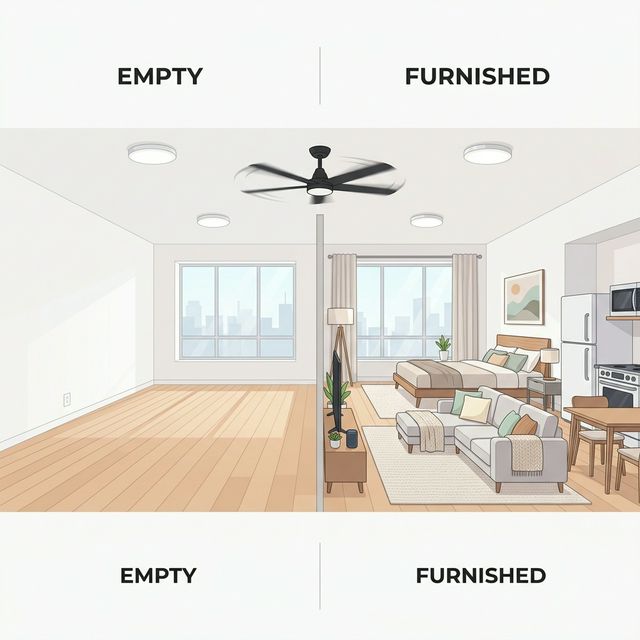
The distinction between furnished and unfurnished rentals goes beyond whether the apartment comes with a sofa. It affects the agreement structure, deposit calculations, liability frameworks, maintenance obligations, tax treatment, and exit conditions. In Bengaluru’s rental market, where furnished and semi-furnished apartments command significant rent premiums, understanding these differences can save both tenants and landlords from costly disputes.
This guide examines the legal framework governing furnished and unfurnished rentals, the critical role of the inventory annexure, depreciation principles, and best practices for agreement drafting.
Defining the Categories
Indian rental law does not provide statutory definitions for “furnished” and “unfurnished.” There is no provision in the Transfer of Property Act, 1882, the Indian Contract Act, 1872, or the Karnataka Rent Act, 1999 that formally categorizes rental premises based on furnishing status. Market practice, however, has established three widely recognized categories:
| Category | Typically Includes | Rent Premium (Bengaluru) |
|---|---|---|
| Unfurnished | Empty unit with basic fittings (lights, fans, kitchen platform, bathroom fittings) | Base rent |
| Semi-furnished | Above + wardrobes, kitchen cabinets, water purifier, geyser, modular kitchen elements | +10-25% |
| Fully furnished | Above + beds, sofa, dining table, washing machine, refrigerator, AC, TV, microwave, curtains | +30-60% |
The Grey Area: What Counts as a “Fitting” vs “Furnishing”?
A frequent source of dispute is the distinction between permanent fittings (part of the property) and movable furnishings (provided separately). This distinction matters because:
- Fittings (lights, fans, built-in wardrobes, kitchen platform, geysers permanently installed) are considered part of the property. Their repair and replacement is generally the landlord’s responsibility, and they cannot be removed by the landlord mid-tenancy without the tenant’s consent.
- Furnishings (movable furniture, appliances, curtains, rugs) are items provided in addition to the property. Their treatment is governed by the inventory annexure and the specific terms of the agreement.
The Transfer of Property Act, Section 108(c), provides that the lessor is bound to put the property in a condition fit for the purpose for which it is let. Fittings that were part of the property when the tenant viewed and agreed to rent it are covered by this obligation. Furnishings, being separate from the property itself, require explicit contractual coverage.
The Inventory Annexure: The Most Important Document
For any furnished or semi-furnished rental, the inventory annexure is the single most critical document. Without it, deposit deduction disputes at exit become a matter of one person’s word against another - and courts have consistently held that the party asserting a claim bears the burden of proof.
What a Proper Inventory Annexure Contains
- Every item provided - with brand name, model number, and serial number where applicable
- Condition at handover - graded as New, Good, Fair, or Worn, with specific descriptive notes (e.g., “minor scratch on top-left corner of dining table,” “AC remote missing back cover”)
- Photographs - date-stamped photos of each item and the apartment’s overall condition, ideally with a newspaper or time-stamped device visible for date verification
- Age of item - approximate purchase date or age in years (critical for depreciation calculations)
- Purchase price or replacement value - estimated current market value or original purchase price with receipt if available
- Quantity - number of each item (e.g., “4 dining chairs, 2 bedside tables”)
Legal Significance of the Annexure
The inventory annexure, when signed by both parties and attached to the agreement, becomes part of the contract under Section 10 of the Indian Contract Act. It establishes the baseline condition against which exit condition is measured. Courts have repeatedly emphasized the importance of contemporaneous documentation in deposit disputes.
In the absence of an inventory annexure:
- The landlord bears the burden of proving that specific damage occurred during the tenancy (Section 104, Bharatiya Sakshya Adhiniyam, 2023)
- The tenant’s claim that items were already damaged at move-in is harder to rebut if no baseline exists
- Consumer forums and courts tend to view the absence of documentation unfavorably for the party making deduction claims
Best Practice: Digital Inventory with Cloud Backup
Create the inventory jointly during the move-in walkthrough. Use a smartphone to photograph each item with the condition notes visible. Both parties should have copies - share via email with both parties’ email addresses in the chain for timestamp verification. This creates a contemporaneous, tamper-evident record.
Legal Framework for Furnished Rentals
Indian Contract Act, 1872
Section 10 - Valid contract: The inventory and maintenance terms form part of the contractual framework. Both parties must understand and agree to the condition and list of items being provided.
Section 73 - Compensation for breach: If items are damaged beyond normal wear and tear, the landlord can claim compensation proportionate to the actual loss suffered. The key word is “proportionate” - the landlord cannot claim the full replacement value of a depreciated item.
Section 74 - Penalty or liquidated damages: If the agreement specifies a fixed penalty for damage (e.g., “any damage to furniture shall result in forfeiture of Rs 50,000 from the deposit”), this may be treated as a penalty clause. Under Section 74, the court will award only reasonable compensation, not necessarily the stipulated amount, as established in Fateh Chand v. Balkishan Dass (AIR 1963 SC 1405).
Transfer of Property Act, 1882
Section 108(c) - Landlord’s obligations: The lessor is bound to put and keep the property in a condition fit for the purpose for which it was let. For furnished rentals, this extends to maintaining provided items in usable condition - particularly structural elements and major appliances that were represented as functional at the time of letting.
Section 108(m) - Tenant’s obligations: The lessee must keep the property and all items provided in “as good condition as he received them, subject to the changes caused by reasonable wear and tear or irresistible force.” This is the statutory basis for the “fair wear and tear” defense.
Section 108(o) - Restoration on termination: On the determination of the lease, the lessee must put the property in the same condition as received, subject to fair wear and tear. This applies to furnishings as well.
Bharatiya Sakshya Adhiniyam, 2023 (BSA)
Section 104 (successor to Section 101 of Indian Evidence Act, 1872): The burden of proof lies on the party who asserts a fact. In deposit deduction disputes, the landlord claiming damage must prove: (a) the item was in better condition at move-in, (b) the damage is beyond normal wear and tear, and (c) the claimed deduction amount is reasonable.
Depreciation: The Hidden Factor
Depreciation is the natural loss of value of furniture and appliances over time due to normal use. This concept is critical for two reasons: it determines the maximum reasonable deduction from the deposit, and it prevents landlords from effectively profiting from normal aging of their assets at the tenant’s expense.
Income Tax Act Depreciation Rates (Block of Assets)
The Income Tax Rules (Appendix I) and the Companies Act, 2013 (Schedule II) prescribe depreciation rates for different asset categories. While these rates are designed for tax and accounting purposes, they provide a useful reference point for rental disputes:
| Asset Category | IT Act Rate (WDV) | Useful Life (approx.) |
|---|---|---|
| Furniture and fittings | 10% | 10 years |
| Plant and machinery (general) | 15% | 6-7 years |
| Computers and electronic items | 40% | 2.5 years |
Practical Depreciation Rates for Rental Disputes
Courts and consumer forums typically apply more practical depreciation schedules:
| Item Category | Useful Life | Annual Depreciation (SLM) | Notes |
|---|---|---|---|
| Electronics (TV, washing machine, refrigerator) | 5-8 years | 12-20% | Higher for technology items that become obsolete |
| Furniture (solid wood) | 8-15 years | 7-12% | Teak and rosewood last longer; particle board deteriorates faster |
| Furniture (engineered wood / MDF) | 4-7 years | 15-25% | Lower durability, more susceptible to moisture |
| Mattresses and soft furnishings | 3-5 years | 20-33% | Subject to hygiene depreciation as well |
| Kitchen appliances (microwave, mixer) | 5-7 years | 15-20% | Frequency of use affects actual life |
| Air conditioners | 8-10 years | 10-12% | Window vs split affects longevity |
| Curtains and linens | 2-4 years | 25-50% | Fabric degradation from sunlight and washing |
| Water purifiers | 5-7 years | 15-20% | Filter replacement is a consumable, not depreciation |
| Geysers | 7-10 years | 10-15% | Depends on water hardness |
Applying Depreciation: A Practical Example
A landlord purchased a washing machine for Rs 30,000 three years ago. During the tenancy (11 months), the machine develops a fault. The tenant is not responsible for age-related failures. But suppose the tenant damaged the machine through negligence (e.g., overloading causing motor failure):
- Original cost: Rs 30,000
- Age at damage: 3 years (plus 11 months of tenancy)
- Depreciation rate: 15% per year (SLM)
- Depreciated value at the time of damage: Rs 30,000 - (3.9 years x 15% x Rs 30,000) = Rs 30,000 - Rs 17,550 = Rs 12,450
- Maximum reasonable deduction: Rs 12,450 (not Rs 30,000)
If the landlord claims Rs 30,000 for this machine, the tenant should demand depreciation be applied. Consumer forums have consistently applied depreciation in such calculations.
Deposit Implications
| Factor | Unfurnished | Furnished |
|---|---|---|
| Typical deposit (Bengaluru) | 10 months’ rent | 10-12 months’ rent (or 10 months + separate furnishing deposit) |
| Deduction risk at exit | Low (mainly repainting, if contractually required) | Higher (furniture/appliance damage claims, repainting, deep cleaning) |
| Documentation needed at entry | Basic - photos of apartment condition, meter readings | Comprehensive - itemized inventory with photos, condition grading, age of items |
| Documentation needed at exit | Photos showing returned condition, meter readings | Joint inspection against original inventory with item-by-item comparison |
| Common disputes | Repainting costs, wall damage | Depreciation calculation disagreements, definition of “fair wear and tear,” missing items |
Structuring the Deposit for Furnished Rentals
Some agreements separate the deposit into two components:
- Property deposit: Standard 10 months’ rent, covering the premises
- Furnishing deposit: An additional amount (typically 10-20% of the aggregate value of furnished items), covering furniture and appliances
This separation has practical advantages: it clarifies how much is at risk for furnishing-related deductions, and it allows the furnishing deposit to be adjusted if items are added or removed during the tenancy.
Maintenance Responsibilities
A well-drafted agreement for furnished rentals should explicitly address maintenance responsibilities using a tiered framework:
Landlord’s Responsibility (Capital/Structural)
- Structural repairs (walls, plumbing infrastructure, electrical wiring)
- Major appliance replacement due to age, manufacturing defects, or normal end-of-life failure
- Items that fail during normal operation beyond their reasonable useful life (e.g., a refrigerator compressor failing after 8 years, an AC unit requiring gas refill after 5 years)
- Pest control for infestations predating the tenancy (termites in wooden furniture, cockroach infestations in existing kitchen cabinets)
- Replacement of items that become unsafe (e.g., a geyser with a corroded tank)
Tenant’s Responsibility (Operational/Day-to-day)
- Day-to-day cleaning and upkeep of all furnishings
- Minor repairs that are part of normal use (replacing light bulbs, fuses, handles, knobs)
- Damage caused by negligence, misuse, or failure to exercise reasonable care
- Consumables associated with appliances (water purifier filters, AC filters, vacuum cleaner bags)
- Damage caused by the tenant’s guests, pets, or household activities
- Routine cleaning of appliances (chimney filter cleaning, washing machine drum cleaning)
Grey Area: Who Decides?
Disputes often arise over items in the grey area - a tap that starts leaking 6 months into the tenancy, a fan that develops a wobble, a door handle that becomes loose. A practical approach is to include a threshold amount in the agreement: “Repairs costing less than Rs [1,000-2,000] per instance shall be borne by the Licensee. Repairs exceeding this amount shall be communicated to the Licensor, who shall arrange and bear the cost within [7-14] days of notification.”
Tax Implications
For Landlords
Under the Income Tax Act, 1961:
- Rental income from furnished properties is taxable under “Income from House Property” (Section 22) or “Income from Other Sources” depending on the nature of the arrangement
- Landlords can claim depreciation on furniture and appliances provided to tenants as a deduction against rental income
- The depreciation rates under the Act (10% for furniture, 15% for plant and machinery) reduce the taxable rental income
- Repair and maintenance expenses for furnished items are deductible under Section 24(a) (standard deduction of 30% on net annual value) or as actual expenses under “Other Sources”
For Tenants
- The furnishing component of rent does not affect HRA (House Rent Allowance) exemption calculation under Section 10(13A) - the entire rent paid (including any furnishing premium) qualifies
- If the tenant pays separately for furniture rental (distinct from the property rent), only the property rent component qualifies for HRA
TDS on Rent
Under Section 194-IB of the Income Tax Act, if the monthly rent exceeds Rs 50,000, the tenant must deduct TDS at 2% (applicable from October 1, 2024) from the rent payment. This applies to the total rent, including any furnishing premium. The tenant deposits the TDS using Form 26QC and issues Form 16C to the landlord.
Exit Process for Furnished Rentals
At the end of the agreement, the exit process for furnished rentals is more involved than for unfurnished properties:
Step 1: Schedule a Joint Inspection
Both parties walk through the property with the original inventory annexure in hand. This should be done at least 3-5 days before the final vacating date to allow time for any repairs or dispute resolution.
Step 2: Item-by-Item Comparison
Check each item against the documented entry condition:
- Is the item present?
- Is its condition consistent with normal wear and tear over the tenancy period?
- Is there damage beyond normal use?
- Has the item been moved from its original location?
Step 3: Agree on Deductions
For any damage beyond normal wear and tear, the deduction should be calculated applying depreciation to the item’s value. Both parties should agree on the specific amounts. If there is disagreement, document the disputed items and amounts in writing - signed by both parties - for potential future resolution.
Step 4: Photograph the Exit Condition
Date-stamped photos of every room and every furnished item create an exit record. Compare these against the entry photographs.
Step 5: Document Agreed Deductions
Both parties sign a settlement statement listing: (a) the total deposit held, (b) each agreed deduction with the item, damage description, and amount, (c) the net refundable amount, and (d) the timeline for refund.
Step 6: Return the Deposit
The landlord returns the deposit minus agreed deductions within the contractually specified timeline. If no timeline is specified, a reasonable period of 30-60 days applies.
Common Disputes and How to Avoid Them
| Dispute | Prevention Strategy |
|---|---|
| “This furniture was not damaged when you moved in” | Detailed inventory annexure with photographs at entry |
| “The washing machine was only 2 years old” | Record purchase date and receipt in the annexure |
| “Normal wear and tear? This is damage!” | Agree on the definition of “fair wear and tear” in the agreement; reference practical depreciation schedules |
| “The cleaning charges are Rs 15,000” | Specify in the agreement whether professional cleaning at exit is required, and if so, the expected cost range |
| “I provided 4 chairs, only 3 are here” | Itemized count in the inventory with photographs |
| “The AC is not cooling properly” | Test all appliances during entry inspection and record their functioning status |
Key Takeaways
- Always insist on a detailed inventory annexure with photographs for any furnished rental - this document is your primary protection in deposit disputes
- The annexure should list every item with its condition, brand, model, age, and estimated value
- Depreciation must be factored into any damage claims - a 5-year-old item is not worth its purchase price, and consumer forums consistently apply depreciation
- Maintenance responsibilities should be explicitly assigned in the agreement for each category (structural vs operational vs consumables)
- Conduct a documented joint inspection at both entry and exit, with date-stamped photographs
- The landlord bears responsibility for age-related failures of provided appliances unless the agreement explicitly provides otherwise
- Separate the deposit into property and furnishing components for clarity in deduction calculations
- TDS at 2% applies when monthly rent exceeds Rs 50,000, covering the total rent including furnishing premium
- The Transfer of Property Act provides baseline obligations for both parties, but a well-drafted agreement should go beyond statutory minimums
Furnished or not, pick the right building.
Furniture is negotiable; the building is not. See what residents say about a specific building, the rent, the deposit, the maintenance reality, on know.place, a map of honest, building-level rental experiences across India.
Explore know.placeReferences
- Indian Contract Act, 1872 - Sections 10, 73, 74: Full text on India Code
- Transfer of Property Act, 1882 - Sections 108(c), 108(m), 108(o): Full text on India Code
- Bharatiya Sakshya Adhiniyam, 2023 (BSA) - Section 104 (burden of proof): Full text on India Code
- Income Tax Act, 1961 - Section 10(13A) (HRA exemption), Section 22 (income from house property), Section 24(a) (standard deduction), Section 194-IB (TDS on rent): Full text on India Code. Depreciation rates: IT Rules - Appendix I
- Karnataka Rent Act, 1999 (Karnataka Act 34 of 2001) - Sections on landlord and tenant obligations: Full text on India Code
- Fateh Chand v. Balkishan Dass, AIR 1963 SC 1405 - Supreme Court on penalty clauses and reasonable compensation: Full judgment on Indian Kanoon
- Consumer Protection Act, 2019 - Section 2(11) (deficiency in service), applicable to landlord-tenant disputes involving service components: Full text on India Code
- Companies Act, 2013 - Schedule II (useful life of assets, used as reference for depreciation calculations): Full text on India Code