
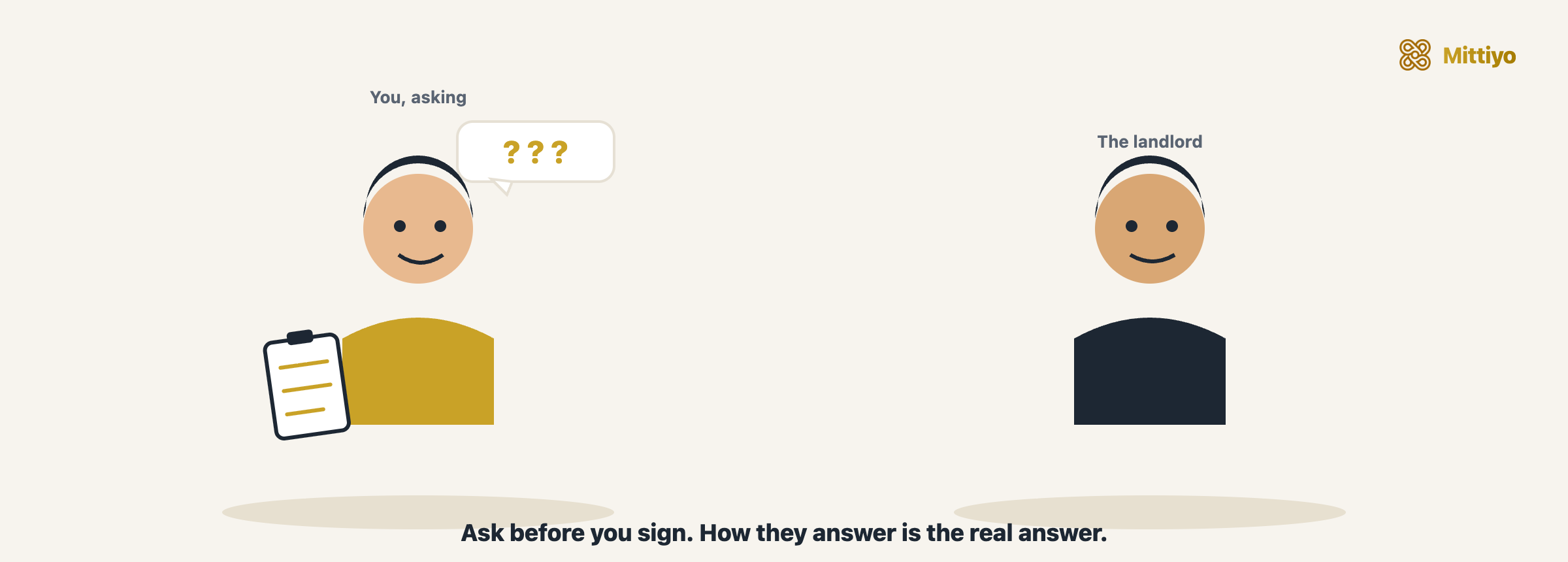
By the time you are standing in a flat you like, it is easy to focus on whether your sofa will fit and forget to ask the questions that actually decide whether renting it will be a good year or a bad one. Those questions are rarely about the flat itself. They are about the money, the terms, and the person on the other side of the agreement.
The good news is that asking them costs nothing and tells you a lot, not just from the answers, but from how willingly and clearly the landlord gives them. This is the list to run through before you sign, grouped so you do not miss a category, along with the answers that should make you think twice.
The five things to ask about
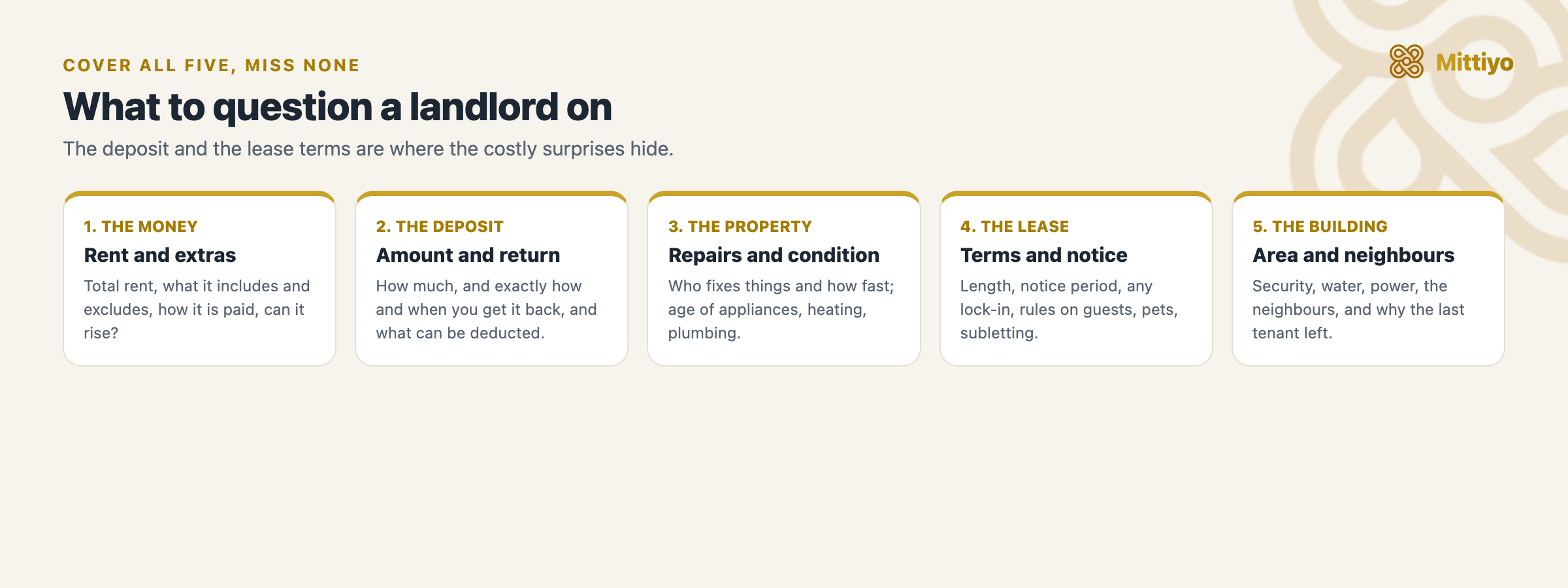 Work through all five. The deposit and the lease terms are where the costly surprises hide.
1. The money
- What is the total monthly rent, and what does it include and exclude? Utilities, maintenance, internet, parking?
- When and how is rent paid, and is there a late fee?
- Is the rent fixed for the lease, or can it rise, and by how much?
2. The deposit
- How much is the deposit?
- Exactly how, and when, do I get it back, and what can be deducted?
- Is there a move-in inspection so its condition is documented?
This is the single most important area to pin down, and the one landlords are most often vague about.
3. The property and repairs
- Who handles repairs, and how quickly? The landlord directly, or an agent?
- How old and reliable are the appliances, heating or cooling, and plumbing?
- Has anything major been repaired or had problems recently?
4. The lease and terms
- How long is the lease, and what is the notice period?
- Is there a lock-in period, and what happens to the deposit if I leave early?
- Can the landlord enter the property, and with how much notice?
- What are the rules on guests, pets, subletting, and any building restrictions?
- Who pays for routine maintenance versus major repairs?
These two terms sound similar and trip up renters everywhere, but they do very different things.
Notice period is how far in advance you must tell the landlord you are leaving, commonly one to two months. Leave without giving proper notice and the landlord can keep that much rent, or your deposit.
Lock-in period is a minimum time you are committed to stay. Break the lease during the lock-in and you can lose the deposit or owe the remaining lock-in rent, even if you gave notice.
So a “12-month lease with a 6-month lock-in and 2-month notice” means: you cannot leave in the first 6 months without a penalty, and after that you must still give 2 months’ notice. Always ask for both numbers, and get them in writing.
5. The building and the area
- Security, water, and power, how reliable are they?
- What are the neighbours like, and is it quiet?
- Why did the last tenant leave?
The answers that should worry you
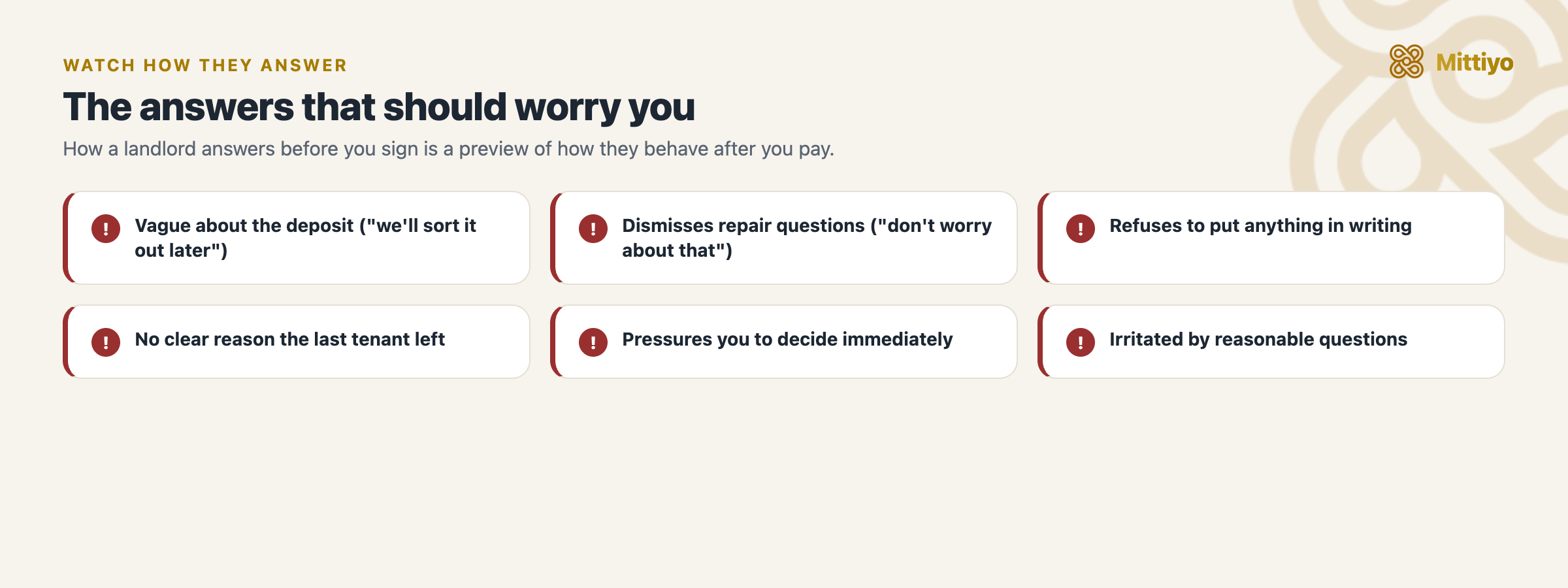 How a landlord answers before you sign is a preview of how they behave after you pay.
Watch not just what a landlord says, but how they say it:
- Vagueness about the deposit. “We will sort it out when you leave” is where deposit disputes begin.
- Dismissing repair questions. “Do not worry about that” means you will be worrying about it.
- Refusing to put things in writing. Verbal promises are worthless in a dispute.
- No clear reason the last tenant left, or refusing to let you speak to them.
- Pressure to decide immediately. Urgency is how you are rushed past the checks.
- Irritation at reasonable questions. A landlord annoyed now will be worse later.
Ask the people who actually live there
The landlord is not your only source, and often not your most honest one. The current or outgoing tenants and the immediate neighbours have no incentive to sell you the place, and they will tell you things a landlord never would. If you can, ask them:
- Does the landlord return deposits fairly, and on time?
- How fast do repairs actually get done?
- What is the building really like, water, power, noise, security, and the neighbours?
- Would you rent here again? The hesitation before the answer tells you plenty.
A landlord who refuses to let you speak to the outgoing tenant, when there is one, is worth a second thought.
A message you can copy before a viewing
If you are enquiring by message, a short, specific note both gets you the facts and signals you are a serious, informed renter:
Hi, I am interested in the flat. Before I view, could you confirm: the total monthly rent and what it includes, the deposit amount and how it is refunded, the lease length, notice period, and any lock-in, who handles repairs, and whether pets and guests are allowed? Thanks.
Clear, complete answers are a good sign. Dodged questions are an answer too.
Get the important answers in writing
Anything that costs money or affects your rights, the deposit terms, what is included, who does repairs, the notice period, should be in the written agreement, not just said out loud. If something important was promised verbally, ask for it to be added before you sign. A landlord happy to put reasonable terms in writing is reassuring; one who resists is telling you something.
Key takeaways
- Ask across five areas: the money, the deposit, repairs, the lease terms, and the building.
- The deposit return, repairs, and notice period are where the costly surprises live, pin those down.
- Judge the landlord by how clearly and willingly they answer, not just the answers.
- Get anything that matters in writing, and make sure the lease matches what you were told.
- Ask why the last tenant left, and speak to current tenants or neighbours if you can.
Some answers you only get from the people who already live there.
A landlord will tell you what they want you to hear. Wherever you rent, know.place is a map of honest, building-level rental experiences from real residents, so you can find out what a building and its management are actually like before you ever ask a question, and add your own experience to help the next tenant.
Explore know.placeRelated guides: Apartment viewing checklist · How to spot a rental scam · How much rent can you afford?